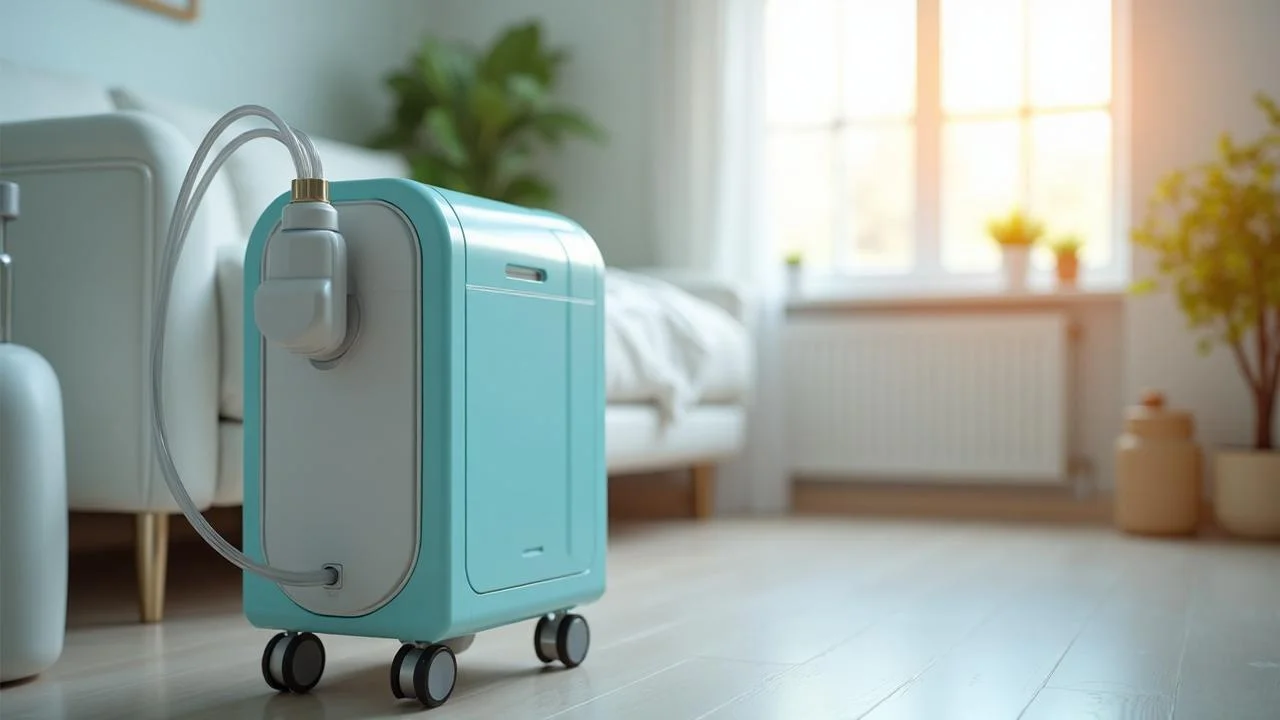
Oxygen concentrators are medical devices that draw in ordinary room air and separate the oxygen from nitrogen, delivering a concentrated stream directly to the patient. Understanding how they function helps you use and maintain your equipment correctly.
Room air is approximately 21% oxygen and 78% nitrogen. An oxygen concentrator exploits this difference using a process called Pressure Swing Adsorption (PSA). Inside the device are two cylindrical chambers called zeolite molecular sieve beds. Zeolite is a porous mineral that attracts and traps nitrogen molecules under pressure.
Here is the cycle in plain language: A compressor draws in room air and pressurises it. The pressurised air enters the first sieve bed, where zeolite traps the nitrogen. The oxygen that passes through is collected and delivered to the patient at concentrations typically between 87% and 96%. While the first bed is actively filtering, the second bed is being regenerated — the trapped nitrogen is released and vented back into the room. The two beds alternate continuously, producing a steady flow of concentrated oxygen.
The delivered oxygen percentage depends on the flow rate. At lower settings (1–2 litres per minute), most units achieve above 93% purity. At higher flow rates, purity may dip slightly. Your prescribing physician sets the appropriate flow rate based on your clinical need.
Home concentrators are designed for continuous operation and require only routine filter cleaning. Portable models use the same PSA technology in a lighter housing and often offer pulse-dose delivery, which delivers oxygen only during inhalation to conserve output.
If your concentrator alarm sounds or you notice a change in how you feel while using it, contact TCH Medical's 24/7 technical support line immediately rather than adjusting settings yourself.