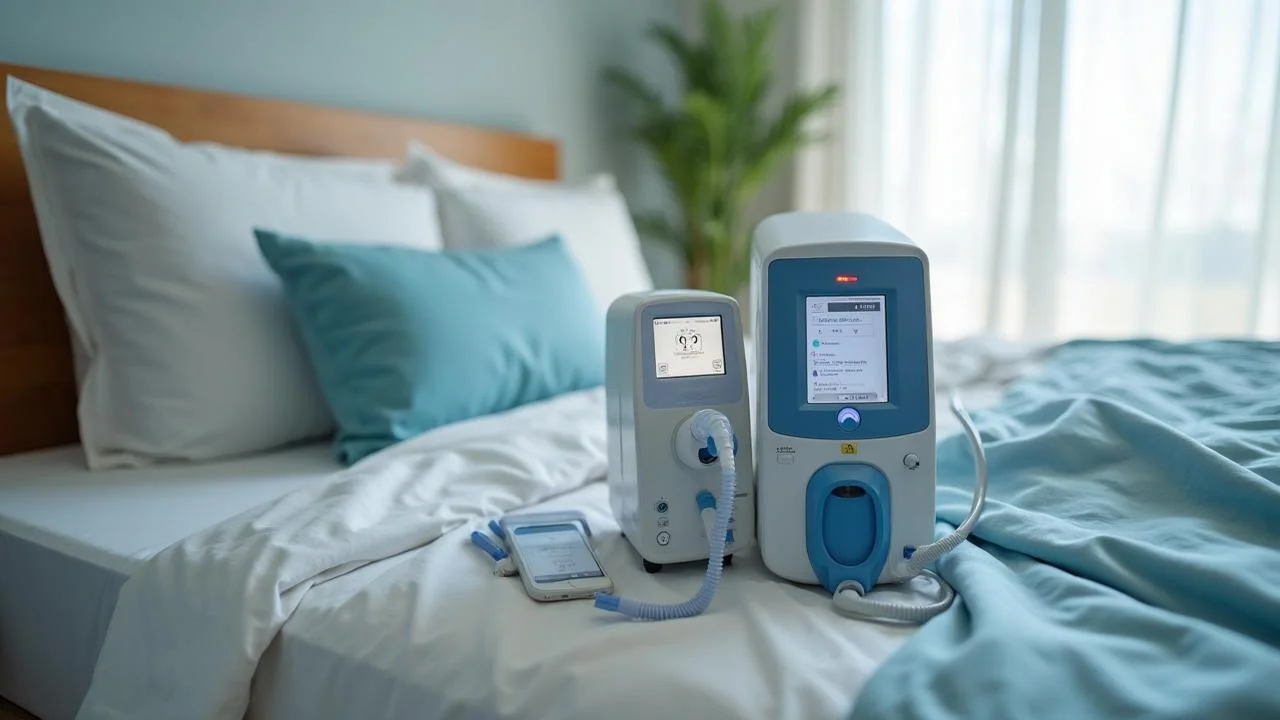
Choosing between a portable oxygen concentrator (POC) and a home oxygen system is one of the first practical decisions a newly prescribed patient faces. Neither option is universally better — the right choice depends on your prescribed flow rate, how much time you spend away from home, and your physical capacity to carry equipment.
Home oxygen concentrators, sometimes called stationary concentrators, are designed to sit in one place and run continuously. They typically deliver up to 5–10 litres per minute of continuous flow oxygen and are engineered for round-the-clock use. They are heavier (usually 8–20 kg), require a power outlet, and are not intended to be carried. If your prescription is for nighttime use only, or if you spend most of your time indoors, a home unit is usually the most economical and reliable option.
Portable oxygen concentrators weigh between 1 and 4 kg and run on rechargeable batteries, making them suitable for travel, appointments, and outings. Most portable units use pulse-dose delivery, which triggers oxygen flow only when you inhale. This is efficient but not appropriate for all patients — those who breathe through the mouth, who are on higher flow rates, or who use oxygen during sleep generally require continuous flow, which only larger portable units or home concentrators provide.
Flow rate matters enormously here. If your physician has prescribed more than 3 litres per minute of continuous flow, your options in the portable category narrow considerably. Always confirm your prescription requirements before selecting a device.
Practically speaking, many patients benefit from both: a home unit for rest and sleep, and a portable unit for outings. TCH Medical stocks a curated range of both categories, and their clinical advisors can help match a device to your prescription. Budget-wise, home units cost less upfront than comparable portables of equivalent clinical capability.
Oxygen cylinders remain an option for short-duration supplemental use but are not practical or cost-effective for patients with a long-term or daily prescription. For anything beyond occasional short-term use, a concentrator is the appropriate choice.